Designing a Halloween Horror 20 Oz Tumbler with Steampunk Octopus Sublimation Art
The intersection of seasonal aesthetics and functional drinkware has created a vibrant niche for custom sublimation projects. Among the most compelling themes for the autumn season is the Halloween Horror 20 Oz Tumbler, Octopus concept. This specific design approach merges the eerie allure of deep-sea mythology with the industrial grit of steampunk mechanics, resulting in a visual narrative that stands out in a crowded market of generic spooky decor. For creators, crafters, and DIY enthusiasts, understanding the nuances of this design is essential for producing high-quality, durable products that resonate with adult consumers aged 20 to 50.
This article explores the technical and aesthetic considerations of using a 3D sublimation design featuring a steampunk octopus. It examines how this specific motif compares to traditional Halloween imagery, evaluates the versatility of the digital asset across various product types, and provides practical guidance on when this design choice offers the highest return on investment for your creative efforts.
Deconstructing the Steampunk Octopus Aesthetic
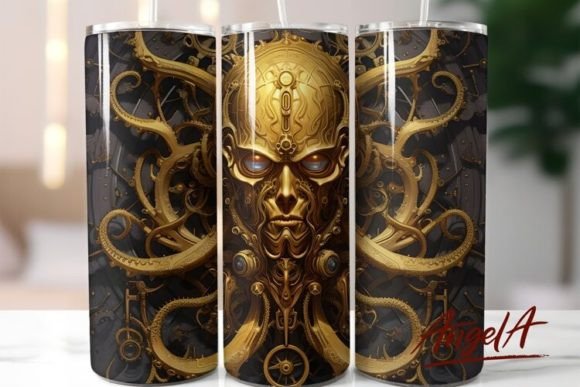
The Halloween Horror 20 Oz Tumbler, Octopus is not merely a picture of a sea creature; it is a complex composition that relies on the juxtaposition of organic and mechanical elements. The core of this design is the "steampunk" genre, which imagines a world where steam power and Victorian-era engineering dominate. When applied to an octopus, a creature already associated with mystery and the unknown, the result is a figure that feels both ancient and artificially enhanced.
In a typical 3D sublimation design of this nature, you will see tentacles wrapped around brass gears, copper pipes, and pressure gauges. The color palette often shifts away from the bright oranges and blacks of traditional Halloween decor, favoring deeper tones like rusted iron, oxidized copper, midnight blue, and shadowy blacks. This darker, more sophisticated palette appeals to an older demographic that may find cartoonish ghosts or pumpkins too juvenile. The "horror" element is subtle, derived from the uncanny valley effect of a biological creature merged with cold machinery, rather than explicit gore or shock value.
For a 20-ounce tumbler, the cylindrical surface area allows this intricate detail to wrap around the user’s hand, creating an immersive experience. The 3D aspect of the design is crucial here. Unlike flat 2D illustrations, a 3D-rendered image provides depth, shading, and perspective that make the octopus appear as if it is emerging from the metal surface of the tumbler. This level of detail requires high-resolution source files, typically PNGs at 300 DPI, to ensure that the fine lines of the gears and the texture of the octopus’s skin do not pixelate during the printing process.
Versatility Beyond Drinkware: Expanding Your Product Line
While the primary application discussed is the Halloween Horror 20 Oz Tumbler, Octopus, the utility of a high-quality, round sublimation design extends far beyond a single product type. The digital asset described—often provided as a straight design measuring approximately 9.3 by 8.2 inches—is inherently versatile due to its circular or wrap-around nature. Creators who purchase or generate such AI-driven designs can maximize their value by applying them to a diverse range of merchandise.
- Wall Clocks: The circular composition of many octopus designs makes them ideal for round wall clocks. The tentacles can radiate outward from the center, framing the clock hands without obscuring them, turning a functional item into a focal point of room decor.
- Round Keychains and Earrings: Smaller iterations of the design can be scaled down for accessories. The intricate details of the steampunk elements remain visible even at smaller sizes if the original resolution is sufficient, offering a cohesive look for customers who want matching sets.
- Car Coasters: Absorbent car coasters are another popular sublimation item. The dark, moody tones of the steampunk octopus hide stains well and add a touch of personality to a vehicle’s interior, appealing to commuters who enjoy thematic consistency in their daily carry items.
- Wall Posters: By adjusting the aspect ratio or using the central motif, the design can be adapted for framed art prints. This allows customers to decorate their homes with the same aesthetic they enjoy on their drinkware.
This multi-product approach reduces the cost per design acquisition. Instead of buying separate graphics for each item, a creator can use one master file, adjusting the scale and crop as needed. This efficiency is particularly valuable for small businesses or hobbyists looking to streamline their workflow during the busy Halloween season.
Comparing Sublimation Designs: 3D Renders vs. Traditional Illustrations
When evaluating options for Halloween-themed merchandise, creators often choose between traditional 2D illustrations and modern 3D sublimation designs. Understanding the tradeoffs between these two approaches is vital for making an informed decision.
Traditional 2D Illustrations often rely on bold lines and flat colors. They are easier to edit and can be stylized in countless ways, from watercolor to sketch-like appearances. However, on a curved surface like a 20-ounce tumbler, 2D designs can sometimes look flat or disjointed if the wrap is not perfectly aligned. They may lack the visual depth that catches the eye in a retail or online marketplace setting.
In contrast, the Halloween Horror 20 Oz Tumbler, Octopus utilizing a 3D sublimation design offers significant advantages in terms of visual impact. The simulated lighting and shadows in a 3D render create an illusion of volume. When printed on a white or light-colored tumbler, the gradients blend seamlessly, making the image appear painted on rather than stuck on. This realism is particularly effective for the steampunk genre, where the metallic textures of brass and steel need to reflect light realistically to convey their material properties.
However, there are limitations. 3D designs are less flexible when it comes to color changes. If you want to change the octopus from blue to green, you cannot simply adjust a hue slider as easily as you might with a vector-based 2D illustration. You must ensure the base design aligns with your brand’s color strategy before committing to the print. Additionally, 3D renders require higher processing power to generate and higher quality control to ensure no artifacts are present in the final PNG file.
Technical Considerations for High-Quality Output
To successfully produce a Halloween Horror 20 Oz Tumbler, Octopus product, attention to technical specifications is non-negotiable. The source file mentioned, a PNG at 300 DPI, is the industry standard for sublimation. DPI (dots per inch) determines the clarity of the image. At 300 DPI, the image contains enough data to print sharply at its intended size. Using a lower resolution file will result in blurry edges and pixelated details, which detracts from the premium feel of the steampunk aesthetic.
The dimensions of 9.3 by 8.2 inches are critical for a standard 20-ounce straight tumbler. This size accounts for the circumference of the tumbler and the height of the printable area. It is important to note that most tumblers have a slight taper or a seam where the wrap meets. Designers must account for this "bleed" area. In a complex design like a steampunk octopus, placing critical details—such as the creature’s eyes or intricate gear mechanisms—too close to the edge can result in them being cut off or distorted during the wrapping process. A best practice is to keep the central focal point in the middle of the 9.3-inch width and allow the tentacles and background elements to extend to the edges.
Furthermore, the choice of tumbler blank matters. Sublimation works best on polyester-coated surfaces. White blanks provide the truest color representation, while colored blanks will tint the design. For a dark, horror-themed octopus, a white blank is usually preferred to maintain the contrast between the dark shadows and the metallic highlights. If using a black or dark-colored tumbler, special sublimation techniques or lighter design variations are required, as standard sublimation ink does not show up well on dark fabrics or coatings.
Decision Factors: Is This Design Right for Your Project?
Choosing the Halloween Horror 20 Oz Tumbler, Octopus design depends on your target audience and production capabilities. This design is an excellent fit if:
- Your audience appreciates niche aesthetics: Steampunk and Lovecraftian horror fans are dedicated communities. They value detail and thematic consistency over generic holiday symbols.
- You have access to high-quality sublimation equipment: To do justice to the 3D render, you need a printer and heat press that can handle fine gradients and consistent heat distribution.
- You want to create a cohesive product line: If you plan to sell matching coasters, keychains, and wall art, this versatile design allows for efficient scaling across multiple SKUs.
Conversely, this design may not be the best choice if:
- You are targeting young children: The "horror" and mechanical complexity may be too intense or unrecognizable for younger demographics who prefer bright, simple characters.
- You require rapid color customization: If your business model relies on offering dozens of color variants quickly, a fixed 3D render may be too rigid compared to vector-based templates.
- You are using low-cost blanks: The intricacy of the design will highlight any imperfections in the coating of cheap tumbler blanks. High-quality substrates are necessary to match the high-quality art.
In conclusion, the Halloween Horror 20 Oz Tumbler, Octopus represents a sophisticated option for creators looking to elevate their seasonal offerings. By leveraging the depth of 3D sublimation design and the versatility of the steampunk theme, you can create products that stand out in a saturated market. Success lies in understanding the technical requirements of sublimation, respecting the nuances of the aesthetic, and aligning the product with the right audience. Whether used for drinkware, home decor, or accessories, this design offers a compelling blend of artistry and functionality that resonates with modern consumers seeking unique, high-quality items.