Evaluating the Die-Line 3D Packaging Box with Mockup for Professional Design Workflows
In the competitive landscape of product retail, particularly within the fragrance and luxury goods sectors, packaging is rarely an afterthought. It is a primary touchpoint that communicates brand value before a customer even experiences the product itself. For designers, marketers, and small business owners, the challenge lies not just in creating an attractive visual identity, but in translating that two-dimensional concept into a tangible, three-dimensional reality without costly physical prototyping at every stage. This is where the Die-Line 3D Packaging Box with Mockup becomes an essential asset in the modern creative toolkit.
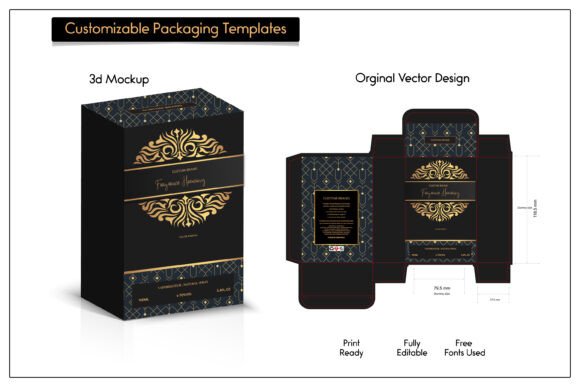
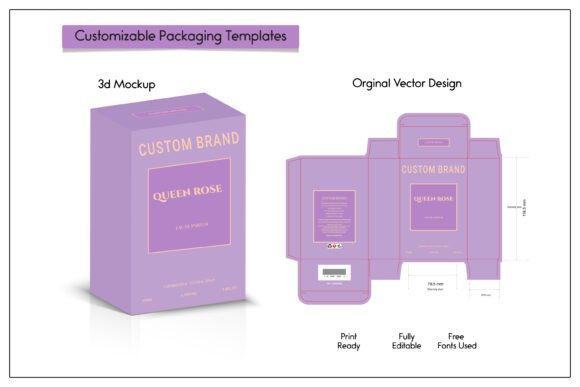
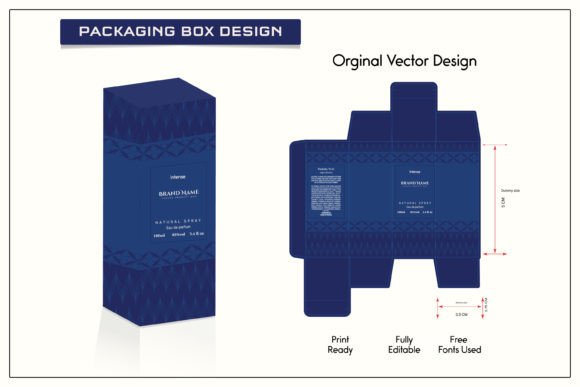
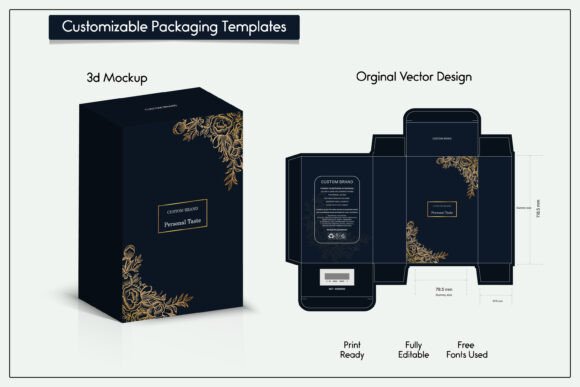
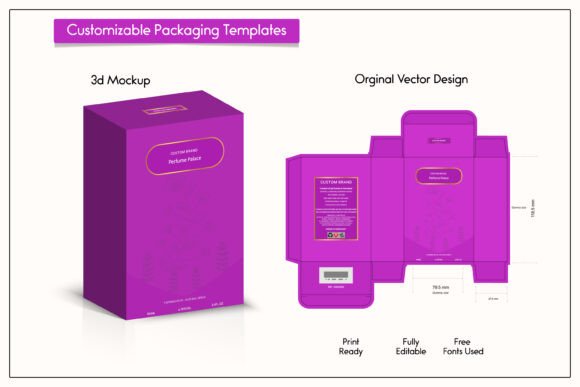
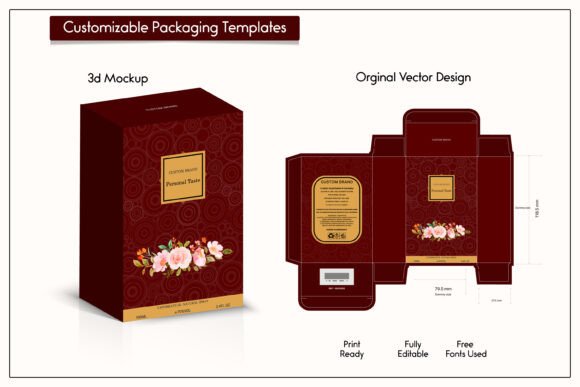
This resource serves as a bridge between conceptual design and manufacturing readiness. By combining precise vector die-lines with high-fidelity 3D illustrations, it allows professionals to visualize how a Luxury Packaging Box will look on a shelf while ensuring the structural integrity required for production. Understanding the utility and limitations of such templates is crucial for anyone involved in Product packaging design, from freelance graphic designers to established branding agencies.
The Intersection of Structural Accuracy and Visual Presentation
A common pitfall in packaging design is the disconnect between the artwork and the physical box structure. A design might look stunning on a flat screen but fail when folded due to incorrect bleed areas, ignored fold lines, or misaligned panels. A comprehensive 3D box die line template addresses this by providing a technically accurate blueprint. These vectors are not merely decorative; they are functional guides that define where the cardboard cuts, folds, and glues.
When paired with a realistic 3D mockup, the designer gains immediate feedback on spatial relationships. For instance, in Fragrance perfume luxury box design, the proportions are often slender and tall. A generic square box template would misrepresent the final product’s elegance. High-quality templates offer specific dimensions and perspectives that reflect the intended product category, allowing for a more honest assessment of how Design elements like foil stamping, embossing, or matte finishes will interact with the box’s geometry.
The value here is twofold: efficiency and accuracy. Instead of spending hours constructing a 3D model from scratch in software like Adobe Illustrator or Photoshop, professionals can utilize pre-built Vector design Template files. This shifts the focus from technical construction to creative execution, enabling faster iteration cycles and more refined final outputs.
Versatility Across Industries and Applications
While often marketed towards the beauty and perfume industries, the utility of a robust 3D Packaging Box Design template extends far beyond scent bottles. The principles of Retail packaging design are universal: clarity, protection, and appeal. Whether you are designing for cosmetics, electronics, artisanal foods, or corporate gifts, the underlying need for a Bespoke packaging box that stands out remains constant.
For entrepreneurs launching a new line of Eco-friendly packaging design products, these templates allow for the visualization of sustainable materials. You can simulate the texture of recycled kraft paper or the clean minimalism of unbleached board. This is particularly relevant given the growing consumer demand for Sustainable packaging solutions. Being able to present a client with a photorealistic render of their product in environmentally conscious packaging can be a decisive factor in securing approval.
Furthermore, the adaptability of these assets supports Innovative packaging design. Because the files are typically provided in editable formats such as AI (Adobe Illustrator), PDF, and JPG, users can manipulate every aspect of the design. You can resize the vector paths to fit different product dimensions without losing quality, a critical feature when scaling a design from a sample run to mass production. This flexibility ensures that the Custom packaging box design process remains agile and responsive to changing project requirements.
Technical Specifications and Workflow Integration
To truly appreciate the professional value of a Die-Line 3D Packaging Box with Mockup, one must examine the file structure and delivery format. High-standard packages usually include a ZIP file containing multiple formats to suit various stages of the design workflow:
- AI File: The cornerstone of the package. This editable vector file allows for precise manipulation of the die-line, adjustment of bleed areas, and layering of artwork. It ensures that all graphics remain crisp regardless of scaling.
- PDF Print File: Essential for pre-press checks. This format preserves fonts and vectors, making it ideal for sending to printers or sharing with clients who do not have design software.
- JPG File: Useful for quick previews, social media teasers, or inclusion in pitch decks where file size and compatibility are priorities.
The inclusion of 100 original vector Design elements means that users are not limited to stock imagery. Every frame, label, and decorative motif can be customized. This level of control is vital for maintaining brand consistency. For example, if a brand uses a specific shade of gold for its logo, the vector format allows for exact color matching using CMYK or Pantone values, ensuring that the digital mockup closely resembles the final printed product.
Usability is another key consideration. The best templates are organized with clear layer structures. Designers should be able to toggle visibility for different components—such as the box body, lid, and interior inserts—independently. This organization facilitates the creation of exploded views or step-by-step assembly guides, which can be incredibly helpful for manufacturers and end-users alike.
Real-World Performance and Limitations
While these tools are powerful, it is important to approach them with a realistic understanding of their role. A 3D Illustration is a representation, not a substitute for physical prototyping. Colors on a screen, no matter how calibrated, will differ from ink on paper. Textures simulated in software may not fully capture the tactile experience of a Corrugated packaging design or a soft-touch laminate.
Therefore, these mockups should be viewed as communication and validation tools rather than final proofing mechanisms. They excel in helping stakeholders visualize the overall aesthetic and structural feasibility. They are less effective in predicting minute printing errors or material behaviors under stress. Professionals should always follow up digital approvals with physical samples, especially for large print runs.
Additionally, while the templates are resizable, significant changes to the aspect ratio may require manual adjustment of the die-line logic. Simply stretching a vector can distort fold allowances. Users with intermediate to advanced skills in Adobe Illustrator will get the most value, as they can tweak the structural lines to accommodate unique product shapes that deviate from standard rectangular forms.
Who Benefits Most from This Resource?
The Die-Line 3D Packaging Box with Mockup is particularly beneficial for several groups:
- Freelance Designers and Agencies: Those who need to deliver high-quality presentations quickly. The ability to generate photorealistic renders reduces the time spent on manual 3D modeling, allowing for more billable hours focused on creative strategy.
- Small Business Owners and Entrepreneurs: Individuals launching products on platforms like Etsy or Amazon who need professional-grade visuals for their listings but lack the budget for custom photography shoots.
- Marketing Teams: Professionals who need to create cohesive campaign materials across digital and print channels. Consistent use of the same 3D assets ensures brand uniformity.
- Educators and Students: Those learning the intricacies of packaging design. These templates serve as excellent educational tools for understanding the relationship between 2D layouts and 3D forms.
For these users, the investment in a high-quality template pays dividends in time saved and professional credibility gained. It elevates the perceived value of their work, making pitches more compelling and designs more marketable.
Final Thoughts on Long-Term Value
In an era where Packaging design trends shift rapidly towards minimalism, sustainability, and experiential unboxing, having a flexible and reliable design foundation is invaluable. The Die-Line 3D Packaging Box with Mockup offers more than just a pretty picture; it provides a structured framework for innovation. It empowers creators to experiment with Creative packaging ideas without the fear of structural failure or excessive cost.
By integrating these tools into your workflow, you ensure that your Luxury packaging box concepts are not only visually striking but also technically sound. Whether you are designing for the delicate nuances of a perfume bottle or the robust needs of industrial goods, the precision of a well-crafted vector template combined with the realism of a 3D mockup remains one of the most effective ways to bring your vision to life. As with any professional tool, mastery comes from practice and understanding its boundaries, but the potential for enhancing your design output is substantial.