Evaluating the Roll Torn Paper Infographic Template for Modern Web Design
In the evolving landscape of digital marketing and corporate communication, visual hierarchy plays a pivotal role in how information is consumed. The Roll Torn Paper Infographic represents a specific design approach that merges retro tactile aesthetics with modern vector precision. This template is not merely a decorative element; it is a functional tool designed to structure data, workflows, and step-by-step guides in a way that captures attention while maintaining clarity. For designers, marketers, and business owners evaluating visual assets, understanding the utility, technical specifications, and strategic application of this torn paper style is essential for making informed decisions about brand presentation.
Understanding the Design Concept
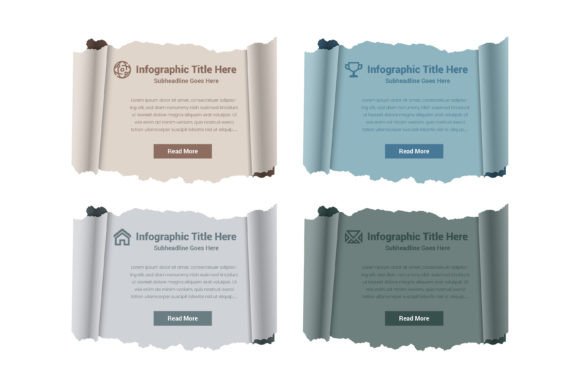
The core concept behind the Roll Torn Paper Infographic is the simulation of physical texture within a digital space. By utilizing a "ripped" or "torn" edge effect, the design creates a sense of depth and layering. This technique breaks the monotony of flat, rectangular layouts often seen in standard web banners and brochures. The template typically features distinct sections—often four main options or steps—framed by these irregular paper edges. This visual break helps segment complex information into digestible chunks, guiding the viewer’s eye through a logical progression.
Unlike static raster images, this asset is built as a 100% vector illustration. This distinction is critical for professional use. Vector graphics are defined by mathematical paths rather than pixels, allowing them to be scaled infinitely without losing resolution. Whether the final output is a small icon on a mobile screen or a large-format printed banner, the clarity remains intact. The inclusion of icons and a "read more" button placeholder further enhances its functionality, transforming it from a passive image into an interactive component of a user interface.
Technical Specifications and Usability
When evaluating any graphic resource, technical compatibility and ease of customization are primary concerns. The Roll Torn Paper Infographic is delivered in a comprehensive file set that includes AI (Adobe Illustrator), EPS, JPG, and SVG formats. This variety ensures that the asset can be integrated into various workflows, from high-end print production to lightweight web deployment.
- High Resolution: The files are prepared at 300 DPI, which is the industry standard for high-quality printing. This ensures that textures and edges appear crisp rather than pixelated when printed on flyers, brochures, or stationery.
- Full Editability: A significant advantage of this template is that all elements are editable. Users can modify text, reshape vectors, and adjust colors to align with specific brand guidelines. This flexibility eliminates the need to create custom graphics from scratch, saving considerable time and resources.
- Organization: The layers are well-organized, allowing designers to isolate specific components such as the background, icons, or text boxes. This structured approach facilitates quick modifications and reduces the learning curve for users who may not be advanced vector artists.
Strategic Benefits for Business Communication
Why might a business choose this specific infographic style over traditional charts or plain text? The answer lies in engagement and retention. The abstract and retro nature of the torn paper texture adds a creative flair that can differentiate a brand in a crowded market. It suggests a hands-on, crafted approach, which can be particularly effective for businesses emphasizing creativity, artisanal quality, or personalized service.
Furthermore, the layout is inherently suited for workflow visualization. Many business processes involve sequential steps—such as onboarding new clients, explaining a service tier, or outlining a project timeline. The four-part structure of this template provides a natural framework for these narratives. By combining concise text with relevant icons, the infographic simplifies complex data, making it accessible to a broader audience. This aligns with the principle of "people-first" content, where the primary goal is to help the user understand information quickly and efficiently.
Considerations and Tradeoffs
While the aesthetic appeal is strong, there are practical considerations to weigh. The torn paper style, with its shadows and textured edges, leans towards a pastel or creative vibe. This may not align with brands that require a strictly minimalist, corporate, or ultra-modern technological appearance. In such cases, a clean, flat design without textured overlays might be more appropriate to convey seriousness and precision.
Additionally, while the vector format ensures scalability, the complexity of the design—particularly if it includes multiple shadow effects and detailed textures—can impact file size and loading times if not optimized correctly for web use. Designers must ensure that the SVG or JPG exports are compressed appropriately for digital platforms to maintain site performance. For purely data-heavy reports requiring precise statistical accuracy, a standard bar chart or line graph might offer better clarity than a stylized infographic, which prioritizes visual flow over granular data representation.
Ideal Use Cases
The Roll Torn Paper Infographic is a strong fit for several specific scenarios:
- Marketing Landing Pages: The horizontal layout and "read more" button make it ideal for hero sections or feature highlights on websites. It serves as an engaging entry point that encourages further exploration.
- Educational Content: Blogs and online courses can use this template to break down tutorials into four key steps, enhancing readability and retention.
- Print Collateral: Due to the 300 DPI resolution, it translates well to physical media such as flyers, brochures, and business cards, providing a consistent brand experience across channels.
- Social Media Graphics: The square or horizontal variations can be adapted for Instagram or LinkedIn posts, offering a visually distinct alternative to standard stock photography.
Making the Decision
Choosing the right visual asset depends on your specific goals. If your objective is to present information in a way that is both informative and visually engaging, the Roll Torn Paper Infographic offers a balanced solution. It bridges the gap between artistic expression and functional design. However, if your brand identity relies on stark minimalism or if you are presenting dense statistical data, you may need to consider simpler alternatives.
Ultimately, the value of this template lies in its versatility and ease of customization. It provides a professional foundation that can be adapted to various contexts, from advertising growth metrics to explaining service concepts. By leveraging its vector capabilities and organized structure, designers can create compelling visual narratives that resonate with their audience. For those seeking to enhance their visual communication strategy with a touch of creative texture, this infographic template represents a practical and efficient choice.
For further assistance or specific customization queries regarding this graphic resource, direct contact with the provider is recommended to ensure the asset meets your precise technical and aesthetic requirements.